School-based Curriculum
School Educational Philosophy
As a Catholic diocesan school, we believe that nurturing the next generation is a mission entrusted to us by God. The educational philosophy of our school is rooted in “whole-person education” and a “people-oriented” approach. We uphold the five core values of Catholic schools: Truth, Justice, Love, Life and Family. We hope that students will grow in both knowledge and attitude, develop proper values, follow in the footsteps of Christ, and contribute to society.
Curriculum Features
Our school’s curriculum development is centred on “whole-person education” and a “people-oriented” approach. In alignment with the five core values of Catholic education—Truth, Justice, Love, Life and Family—and the current school curriculum framework and school-based development direction, we promote students’ balanced development in knowledge, skills, values and attitudes. The school adopts C.E.O. (Creativity, Environment and Optimism) as its curriculum development goals. Through the formal curriculum, cross-curricular learning, co-curricular activities and life-wide learning experiences, students’ creativity, environmental awareness and positive learning attitudes are nurtured.
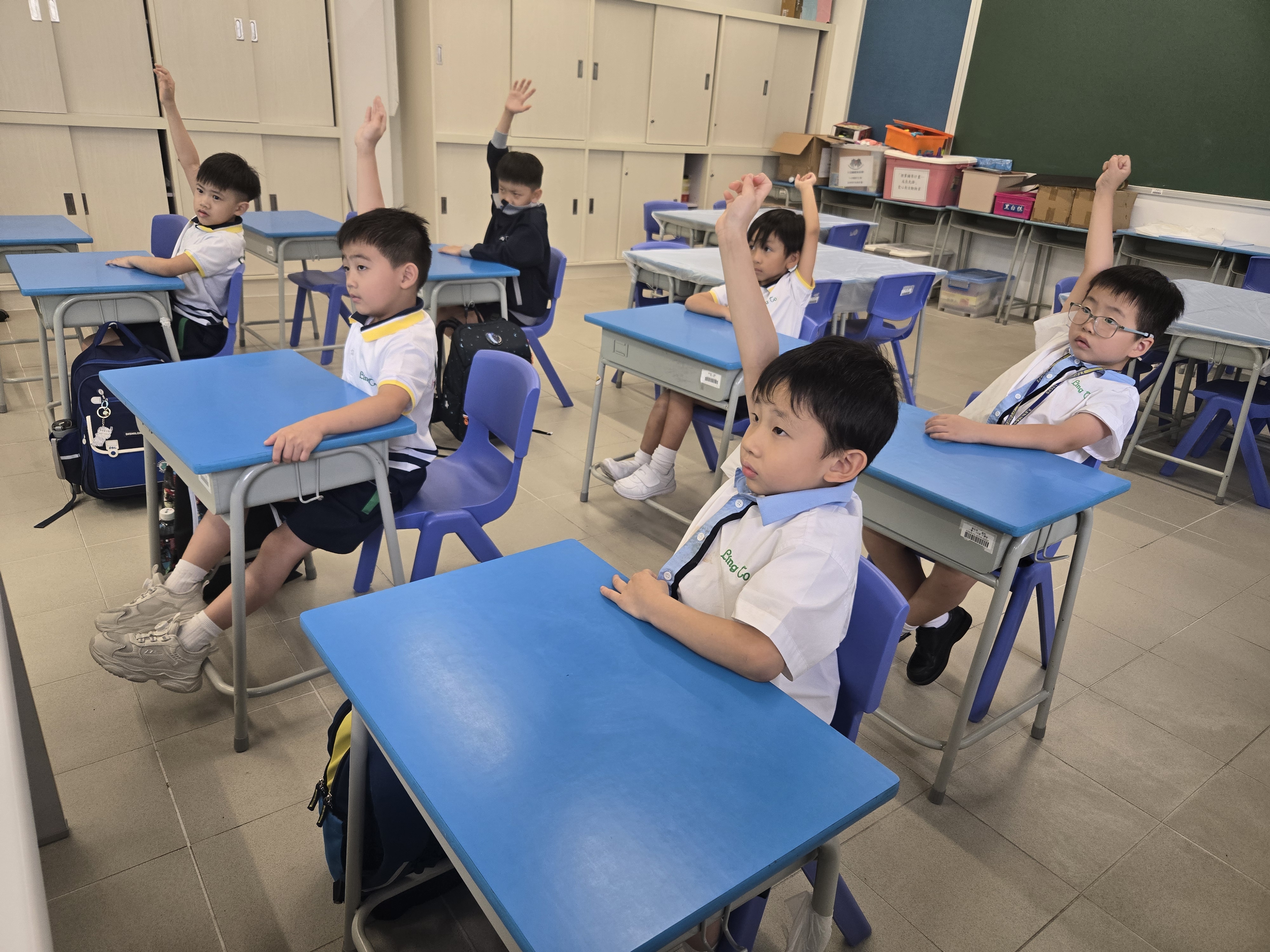
LBD: Learning by Doing
According to grade-level and cross-curricular needs, the school arranges Learning by Doing (LBD) sessions to enable students to apply what they have learned in lessons to authentic or life-related contexts through inquiry, hands-on practice, collaboration and reflection. The activities incorporate elements such as scientific inquiry, STEAM, reading, values education, national education and national security education. They are also aligned with subject curricula and school-based activities to consolidate learning, develop generic skills and foster positive learning attitudes.
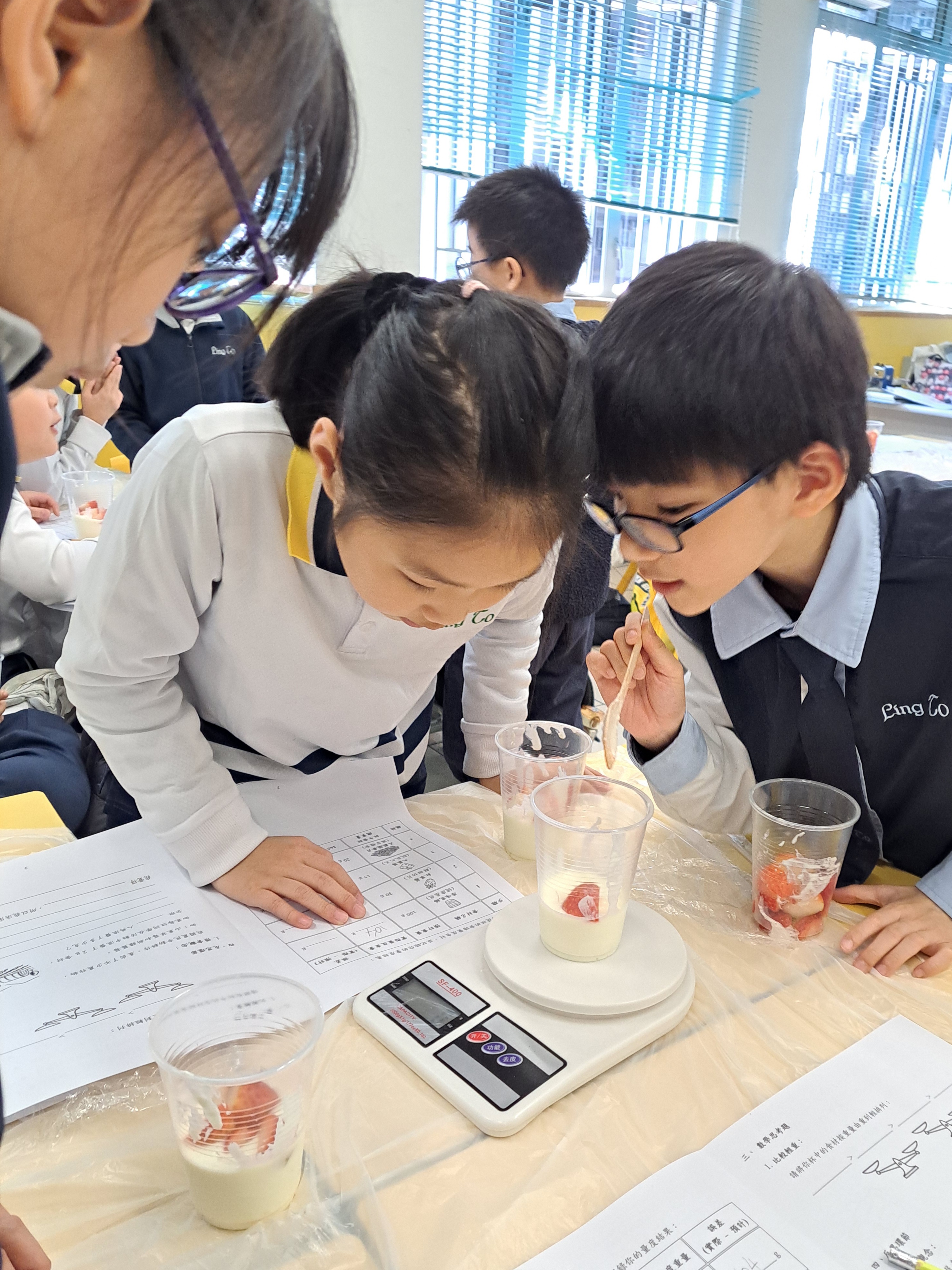
The school also promotes STEAM education and digital learning by integrating Science, Technology, Engineering, the Arts and Mathematics, while incorporating elements of artificial intelligence literacy, computational thinking and innovative problem-solving. Through project learning, e-learning, collaborative learning, visits, service learning and school-based thematic activities, students are able to broaden their horizons and enhance their spirit of inquiry, creative thinking, communication, collaboration and problem-solving skills, thereby preparing themselves for future learning and life.
(1) Basic Direction
(1) Strengthening biliteracy and trilingualism, and enhancing language literacy and practical application
In line with the school-based language curriculum and contextualised learning, Chinese, Putonghua and English learning activities, together with English reading and the SpaceTown Programme, are implemented to create a rich multilingual environment and develop students’ listening, speaking, reading, writing and communication skills.
(2) Promoting life-wide learning by connecting classroom learning, school life and real-life contexts
The school arranges life-wide learning activities, co-curricular activities, thematic talks, field studies, visits and cross-curricular activities according to curriculum needs, enabling students to learn in authentic or life-related contexts, broaden their horizons and deepen classroom learning.
(3) Providing diversified learning experiences to foster positive and proactive learning attitudes
Through visits, scientific inquiry, hands-on experiences, internal and external competitions, reading activities, thematic learning, e-learning and STEAM activities, students are encouraged to explore their interests, build confidence, and develop self-directed learning and collaboration skills.
Examples include the STEAM Carnival and Reading Fun activities.
(4) Developing higher-order thinking, creativity and problem-solving skills
Through the school-based Information Technology curriculum, computational thinking education, artificial intelligence literacy, STEAM thematic learning and thinking skills training, students’ creative thinking, logical reasoning, spirit of inquiry and problem-solving skills are developed.
(5) Catering for learner diversity and supporting different learning needs and potential development
Through small-class teaching, curriculum adaptation, tiered support, collaborative learning, enrichment and remedial support, and gifted education, the school caters for students’ different abilities, interests and learning needs, enabling every student to realise their potential.
1 Life and Civic Education:
Assemblies, flag-raising ceremonies, talks, order and cleanliness competitions, prefect and service ambassador training, life education lessons, service teams
2 Environmental Education:
Thematic talks, display board exhibitions, Environmental Ambassadors, greening and planting activities,
Green School Certification Scheme, Plastic-free Ocean Education Action and Simple School Campus Scheme
3 Student Guidance:
Comprehensive student guidance services, growth lessons, the Understanding the Adolescent Project, and the Newly Arrived Children Programme